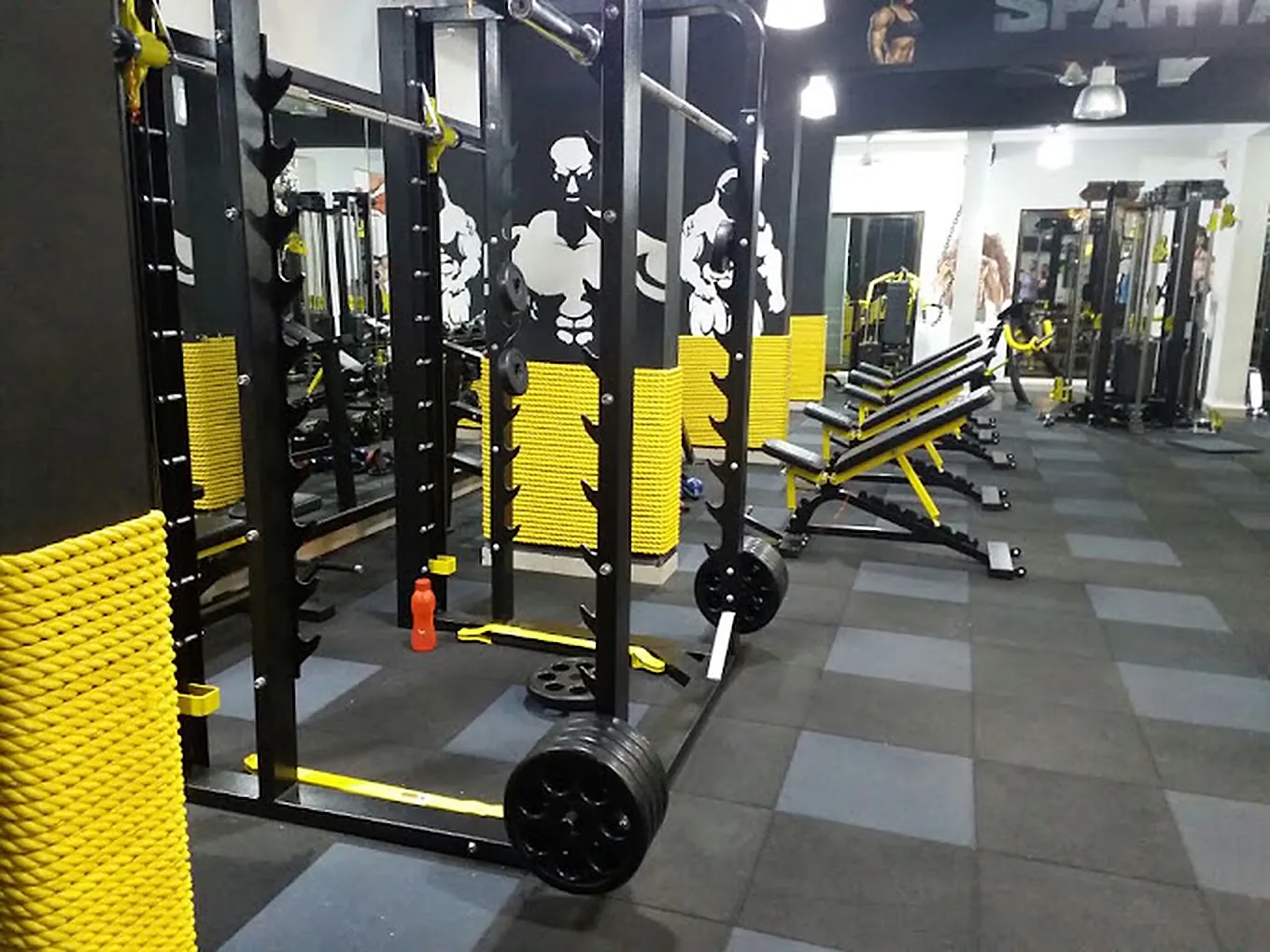
Squat rack with a loaded barbell, adjustable benches and cable stations on the strength floor at SPARTANS

Exercise library Back

Build a back that carries your day

8 back exercises, from your first lat pulldown to a well-coached deadlift, with the muscles each one works and a starting plan for men and women.

How your back works

Your back does most of the quiet work in your day. It holds you upright on the local train, lifts the gas cylinder, carries your child up the stairs and keeps your shoulders from rolling forward over a laptop. Training it comes down to two skills: pulling well, with the wide lats and the muscles between your shoulder blades, and hinging well, with the long muscles beside your spine working together with your glutes and hamstrings.

Below are eight back exercises we coach on the SPARTANS floor, in the order we usually teach them: vertical pulls first, then rows, then the deadlift, then shrugs. For each one you will see which muscles do the work, what it does for your body, how to do it, the mistakes we correct most often and a starting plan. Use the Men and Women switch to see the plan and coaching notes that usually fit. The movement itself is the same for everyone.

The muscles you are training

Latissimus dorsi (lats)
The wide muscles from your armpits down to your lower back. Pulls your upper arm down and back toward your body.
Rhomboids and middle trapezius
The muscles between your shoulder blades. Squeezes the shoulder blades together and holds them steady.
Upper trapezius
The slope from your neck to your shoulders. Lifts the shoulder blades and supports the neck and shoulders.
Rear deltoids
The back of your shoulders. Pulls the arm backward and keeps the shoulder balanced.
Erector spinae
The long muscles running either side of your spine. Holds your spine straight and stands you up from bending.
Biceps, brachialis and forearms
The front of your upper arm and your grip. Bend the elbow and hold on to the bar.
Glutes and hamstrings
Your seat and the back of your thighs. Drive the hips forward so you stand up tall.

At a glance

Which back exercise works which muscle

Each row is an exercise and each column a muscle group. The brighter the square, the bigger that muscle's role. Hover, tap or use the arrow keys on a square for details, and select it to jump to the exercise.

  • Main mover (3)
  • Assists (2)
  • Helps (1)
  • Not a main target
Which back exercise works which muscleHeat map of 8 back exercises against 7 muscle groups. Darker to brighter teal shows emphasis: helps or steadies, assists, main mover. Lat Pulldown (vertical pull): main mover Lats; assists Mid-back, Biceps and grip; helps Rear delts. Pull-up and Negative Pull-up (vertical pull): main mover Lats; assists Mid-back, Biceps and grip; helps Rear delts. Straight-arm Cable Pulldown (vertical pull): main mover Lats; assists Rear delts; helps Mid-back. Seated Cable Row (horizontal pull): main mover Lats, Mid-back; assists Rear delts, Biceps and grip; helps Lower back. One-arm Dumbbell Row (horizontal pull): main mover Lats, Mid-back; assists Rear delts, Biceps and grip; helps Lower back. Bent-over Barbell Row (horizontal pull): main mover Lats, Mid-back; assists Rear delts, Lower back, Biceps and grip; helps Glutes and hams. Conventional Deadlift (hip hinge): main mover Lower back, Glutes and hams; assists Lats, Upper traps, Biceps and grip; helps Mid-back. Dumbbell Shrug (shrug): main mover Upper traps; assists Biceps and grip; helps Lower back.LatsMid-backUppertrapsRear deltsLower backBiceps andgripGlutes andhamsVertical pullLat PulldownMain moverAssistsHelpsAssistsPull-up and Negative Pull-upMain moverAssistsHelpsAssistsStraight-arm Cable PulldownMain moverHelpsAssistsHorizontal pullSeated Cable RowMain moverMain moverAssistsHelpsAssistsOne-arm Dumbbell RowMain moverMain moverAssistsHelpsAssistsBent-over Barbell RowMain moverMain moverAssistsAssistsAssistsHelpsHip hingeConventional DeadliftAssistsHelpsAssistsMain moverAssistsMain moverShrugDumbbell ShrugMain moverHelpsAssistsMain mover in6 of 83 of 81 of 80 of 81 of 80 of 81 of 8
Which back exercise works which muscleHeat map of 8 back exercises against 7 muscle groups. Darker to brighter teal shows emphasis: helps or steadies, assists, main mover. Lat Pulldown (vertical pull): main mover Lats; assists Mid-back, Biceps and grip; helps Rear delts. Pull-up and Negative Pull-up (vertical pull): main mover Lats; assists Mid-back, Biceps and grip; helps Rear delts. Straight-arm Cable Pulldown (vertical pull): main mover Lats; assists Rear delts; helps Mid-back. Seated Cable Row (horizontal pull): main mover Lats, Mid-back; assists Rear delts, Biceps and grip; helps Lower back. One-arm Dumbbell Row (horizontal pull): main mover Lats, Mid-back; assists Rear delts, Biceps and grip; helps Lower back. Bent-over Barbell Row (horizontal pull): main mover Lats, Mid-back; assists Rear delts, Lower back, Biceps and grip; helps Glutes and hams. Conventional Deadlift (hip hinge): main mover Lower back, Glutes and hams; assists Lats, Upper traps, Biceps and grip; helps Mid-back. Dumbbell Shrug (shrug): main mover Upper traps; assists Biceps and grip; helps Lower back.LatsMid-backUpper trapsRear deltsLower backBiceps and gripGlutes and hamsVertical pullLat pulldown3212Pull-up3212Straight-arm312Horizontal pullSeated row33212One-arm row33212Barbell row332221Hip hingeDeadlift212323ShrugShrug312Main in6310101
Main mover = the muscle doing most of the work. Assists = a clear second job. Helps = holds you steady or adds a little. Read across a row to see what one exercise trains, or down a column to find exercises for one muscle.
Which back exercise works which muscle: emphasis of each muscle group per exercise
ExerciseLatsMid-backUpper trapsRear deltsLower backBiceps and gripGlutes and hams
Vertical pull
Lat Pulldownmain moverassists-helps or steadies-assists-
Pull-up and Negative Pull-upmain moverassists-helps or steadies-assists-
Straight-arm Cable Pulldownmain moverhelps or steadies-assists---
Horizontal pull
Seated Cable Rowmain movermain mover-assistshelps or steadiesassists-
One-arm Dumbbell Rowmain movermain mover-assistshelps or steadiesassists-
Bent-over Barbell Rowmain movermain mover-assistsassistsassistshelps or steadies
Hip hinge
Conventional Deadliftassistshelps or steadiesassists-main moverassistsmain mover
Shrug
Dumbbell Shrug--main mover-helps or steadiesassists-

Movement 1 of 4

Vertical pull

You pull down from overhead and the elbows travel down toward your sides. This builds width through the lats.

Exercise 1 of 8

Lat Pulldown

  • Level Beginner
  • Equipment Cable pulley station with a long lat bar
  • Lats: main mover
  • Mid-back: assists
  • Biceps and grip: assists
  • Rear delts: helps or steadies

What it does for your body

The lat pulldown builds your lats, the wide muscles that give the back its V shape, along with the muscles between your shoulder blades and your biceps. Because you choose the load on the stack, a beginner can train the same pulling pattern as a pull-up long before they can lift their own body weight. Done with control, it strengthens the muscles that draw your shoulders down and back, which makes sitting and standing tall easier. In daily life it carries over to pulling down a shop shutter, climbing onto a ledge or hauling yourself up a steep step.

How to do it

  1. Set the thigh pad so your legs are locked in snugly. Grip the bar a little wider than your shoulders, palms facing away.
  2. Sit tall with a slight lean back, chest up and ribs down, arms fully straight at the top.
  3. Start each rep by pulling your shoulder blades down, then drive the elbows down toward your back pockets.
  4. Bring the bar to your upper chest, around collarbone height, and squeeze for a second.
  5. Let the bar rise slowly over two to three seconds until your arms are straight and you feel the stretch.

Tempo 1 s to pull or lift, 1 s hold, 3 s to lower or return.

Starting plan for men

Sets
3–4
Reps
8–12
Rest
90 s

The usual mistake we see is too much weight on the stack and a big backward swing to move it. Drop the load until you can pause the bar at your chest and control the climb back up.

Starting plan for women

Sets
3
Reps
10–15
Rest
60–75 s

Many women start too light here and stay there for months. When the last two reps of a set feel easy, move the pin one plate down. Pulling heavier with good form builds shape and strength, not bulk.

Mistakes we correct most

  • Leaning far back and swinging the body, which turns it into a sloppy row.
  • Pulling the bar behind the neck, which forces the shoulder into a cramped position.
  • Letting the stack slam at the top and the shoulders shrug up to the ears.
  • Squeezing the bar so hard that the biceps take over. Think elbows, not hands.

Swap Harder: negative pull-ups. Easier: a lighter stack with a closer, palms-facing grip.

Exercise 2 of 8

Pull-up and Negative Pull-up

  • Level Intermediate
  • Equipment Pull-up bar (bodyweight)
  • Lats: main mover
  • Mid-back: assists
  • Biceps and grip: assists
  • Rear delts: helps or steadies

What it does for your body

The pull-up is the classic test of upper-body strength. Your lats and the muscles between your shoulder blades lift your whole body, your biceps and forearms work hard to hold the bar, and your core stops you from swinging. It builds grip strength and a wide, strong back, and it teaches your shoulder blades to move well under load. If you cannot do one yet, the negative version, where you step up and lower yourself slowly, builds the strength to get there. Because you lift your own body, the stronger you get for your weight, the more reps you will manage.

How to do it

  1. Hang from the bar with hands just wider than your shoulders, palms facing away, arms straight and legs together.
  2. Pull your shoulder blades down first, then drive your elbows down to lift your chest toward the bar.
  3. Keep going until your chin clears the bar, without craning your neck forward.
  4. Lower yourself under control until your arms are straight again.
  5. For negatives, step up on a steady bench so your chin is over the bar, then lower yourself over three to five seconds.

Tempo 1 s to pull or lift, 1 s hold, 3 s to lower or return.

Starting plan for men

Sets
3–4
Reps
5–8
Rest
2 min

If you can already do eight clean reps, work on control: a full hang at the bottom and a slow three-second lowering. Skip kipping and half reps. They look like progress but do little for your lats.

Starting plan for women

Sets
3–4
Reps
3–6
Rest
90 s

Plenty of women can do pull-ups; most have simply never practised them. If a full rep is not there yet, do slow negatives of three to five seconds, rest, and repeat. With steady practice the first full rep usually follows.

Mistakes we correct most

  • Kicking and swinging the legs to reach the bar, so the back does less of the work.
  • Half reps that never straighten the arms at the bottom.
  • Dropping fast on the way down instead of controlling the lowering.
  • Stepping off a bench that has not been checked and placed safely.

Swap Easier: lat pulldown, or negatives only. Harder: pause for two seconds with the chin over the bar.

Exercise 3 of 8

Straight-arm Cable Pulldown

  • Level Beginner
  • Equipment Cable pulley station with a straight bar or rope
  • Lats: main mover
  • Rear delts: assists
  • Mid-back: helps or steadies

What it does for your body

With your arms kept straight, the biceps are mostly taken out of the pull, so this exercise puts the work squarely on your lats, helped by the rear shoulders and the long head of the triceps. It is a good way to learn what your lats should feel like before rows and pulldowns, and many lifters use it to warm up for back day. It also trains your lats to keep the bar pinned close to your legs in the deadlift. It is a small isolation movement, so use it to add focused work, never to replace the big pulls.

How to do it

  1. Set a straight bar or rope on the high pulley. Stand an arm's length away and hinge slightly forward at the hips.
  2. Hold the bar with arms nearly straight, a soft bend in the elbows, and shoulders pulled down away from your ears.
  3. Sweep the bar down in an arc until it reaches your thighs, keeping the same small bend in the elbows.
  4. Squeeze your lats for a second, then let the bar rise slowly to about eye level.

Tempo 2 s to pull or lift, 1 s hold, 3 s to lower or return.

Starting plan for men

Sets
3
Reps
12–15
Rest
60 s

Leave the ego at the stack. Pick a weight you can sweep down slowly with straight arms, pause at the thighs and feel the lats working. If your triceps or lower back take over, it is too heavy.

Starting plan for women

Sets
2–3
Reps
12–15
Rest
45–60 s

Use this before pulldowns and rows to wake up the lats, so you feel them working in the bigger lifts. Keep the ribs down and the hips still. A light to moderate weight with a clean squeeze is all it needs.

Mistakes we correct most

  • Bending the elbows and turning it into a triceps pushdown.
  • Rounding the back and crunching the trunk down to move the weight.
  • Going too heavy. This is a feel exercise, not a strength test.

Swap Alternative: one arm at a time with a single handle, which helps you feel each side.

Movement 2 of 4

Horizontal pull

You pull toward your body from in front and the elbows travel back past your ribs. This builds thickness through the mid-back.

Exercise 4 of 8

Seated Cable Row

  • Level Beginner
  • Equipment Low cable pulley with a close-grip handle
  • Lats: main mover
  • Mid-back: main mover
  • Rear delts: assists
  • Biceps and grip: assists
  • Lower back: helps or steadies

What it does for your body

The seated cable row trains the middle of your back: the rhomboids and middle trapezius that pull your shoulder blades together, along with the lats, rear shoulders and biceps. These muscles often get very little work when you spend hours hunched over a desk, a phone or a scooter's handlebar. Strengthening them can make it easier to hold your shoulders back, though posture also depends on how long you sit still and how you move through the day. The cable keeps the tension smooth through the whole rep, which makes it a friendly row to learn on.

How to do it

  1. Sit with your feet on the platform, knees slightly bent, holding the handle with arms straight and back tall.
  2. Pull the handle toward your lower ribs, leading with the elbows and keeping them close to your sides.
  3. Squeeze your shoulder blades together for one second, chest up, without leaning far back.
  4. Let the handle travel forward slowly until your arms are straight and the shoulder blades spread apart.

Tempo 1 s to pull or lift, 1 s hold, 3 s to lower or return.

Starting plan for men

Sets
3–4
Reps
8–12
Rest
90 s

Keep the torso nearly still. A small lean is fine, but if you rock back to finish each rep, the weight is too heavy and your lower back is doing the rowing. Own the squeeze, then the slow return.

Starting plan for women

Sets
3
Reps
10–15
Rest
60–75 s

Think about the squeeze between your shoulder blades rather than how hard your hands pull. The cable is smooth and easy to control, which makes this a good place to get comfortable with heavier weights.

Mistakes we correct most

  • Rocking the torso back and forth to move the weight.
  • Rounding the lower back as the handle goes forward.
  • Shrugging the shoulders up toward the ears as you pull.

Swap Harder: the one-arm dumbbell row or the bent-over barbell row.

Exercise 5 of 8

One-arm Dumbbell Row

  • Level Beginner
  • Equipment Dumbbell and a flat or adjustable bench
  • Lats: main mover
  • Mid-back: main mover
  • Rear delts: assists
  • Biceps and grip: assists
  • Lower back: helps or steadies

What it does for your body

Training one side at a time lets you pull through a longer range and shows you the difference between your left and right sides, so you can even it out. Your lats and mid-back do most of the work, the rear shoulder and biceps assist, and your core and the muscles beside your spine work to stop your body twisting. Bracing on a bench takes much of the load off the lower back, so this is often the row we give people who find the barbell row hard on their back. It carries over to pulling a heavy door open or lifting a bag up with one hand.

How to do it

  1. Put your left knee and left hand on a flat bench, right foot on the floor, back flat and roughly level with the floor.
  2. Hold the dumbbell in your right hand, arm hanging straight below your shoulder.
  3. Pull the dumbbell up toward your hip, elbow close to your side, until it reaches your lower ribs.
  4. Pause, then lower it slowly until the arm is straight and you feel the stretch. Finish the set, then switch sides.

Tempo 1 s to pull or lift, 1 s hold, 3 s to lower or return.

Starting plan for men

Sets
3
Reps
8–12 each side
Rest
60–90 s

Most lifters grab the heaviest dumbbell they can swing. Pick one you can lift without twisting your torso, pause at the top and lower over three seconds. Start with your weaker side and match the reps on the other.

Starting plan for women

Sets
3
Reps
10–12 each side
Rest
45–60 s

One side rests while the other works, so you can move from arm to arm with little waiting. Choose a dumbbell that makes the last two reps a real effort, since the bench keeps you steady. Match the reps on both sides.

Mistakes we correct most

  • Twisting the torso open to swing the weight up.
  • Pulling straight up to the chest when you mean to train the lats. Aim the elbow at your hip.
  • Rushing the lowering and cutting the stretch at the bottom short.

Swap Easier on the back: a chest-supported dumbbell row, lying face down on an incline bench.

Exercise 6 of 8

Bent-over Barbell Row

  • Level Intermediate
  • Equipment Barbell and plates
  • Lats: main mover
  • Mid-back: main mover
  • Rear delts: assists
  • Lower back: assists
  • Biceps and grip: assists
  • Glutes and hams: helps or steadies

What it does for your body

The barbell row is the heavy row. Your lats and mid-back pull the bar, your rear shoulders and biceps assist, and the muscles along your spine, with your glutes and hamstrings, hold the bent-over position for the whole set. That makes it a strong builder of back thickness and of the ability to keep a flat back under load, which carries over to lifting heavy things off the floor. It also asks the most of your lower back of all the rows here, so learn the hip hinge first and keep the weight honest. If your lower back is sore or injured, use the one-arm or chest-supported row instead.

How to do it

  1. Stand with feet hip-width and the bar over the middle of your feet. Grip just wider than your knees, palms facing you.
  2. Soften the knees and push your hips back until your torso is about 30 to 45 degrees above the floor.
  3. Brace your stomach as if about to be poked, and keep a flat back from head to hips.
  4. Pull the bar to your lower ribs or upper stomach, elbows travelling back past your body.
  5. Lower the bar under control until your arms are straight, keeping the same torso angle.

Tempo 1 s to pull or lift, 1 s hold, 2 s to lower or return.

Starting plan for men

Sets
3–4
Reps
6–10
Rest
2 min

This is where ego loading shows up most. If you need to heave with your hips or stand up to finish the rep, take plates off. A clean row to the ribs with a still torso builds more back than a sloppy heavy one.

Starting plan for women

Sets
3
Reps
8–12
Rest
90 s

Start with an empty or light bar to learn the hinge, then add plates steadily. Holding the position is half the exercise, so brace before every rep. If your lower back tires before your upper back, rest longer or lighten up.

Mistakes we correct most

  • Standing up a little more with every rep until it becomes a shrug.
  • Rounding the back to reach the bar.
  • Heaving the weight up with a hip thrust instead of pulling with the back.
  • Cranking the neck up to look ahead. Keep your gaze on the floor a little in front.

Swap Easier on the lower back: chest-supported dumbbell row on an incline bench.

Movement 3 of 4

Hip hinge

You bend at the hips with a flat back, then stand tall. This trains the spine muscles, glutes and hamstrings together.

Exercise 7 of 8

Conventional Deadlift

  • Level Intermediate
  • Equipment Barbell and plates
  • Lower back: main mover
  • Glutes and hams: main mover
  • Lats: assists
  • Upper traps: assists
  • Biceps and grip: assists
  • Mid-back: helps or steadies

What it does for your body

The deadlift trains the whole back of your body at once. Your glutes and hamstrings drive the hips forward, the long muscles beside your spine hold your back straight, your quadriceps push the floor away at the start, your lats keep the bar close and your traps and grip hold the load. Done well, it builds strength for picking things up off the floor, from a gas cylinder to a sleeping child, and over time it can help make your lower back sturdier. It is also the most technical and heaviest lift on this page, so learn it with a trainer, start light, and end the set when your back position slips.

How to do it

  1. Stand with feet hip-width, the bar over the middle of your feet and about two finger-widths from your shins.
  2. Hinge down and grip the bar just outside your legs. Hips sit higher than knees and lower than shoulders.
  3. Pull the slack out of the bar, set a flat back, take a big breath into your belly and brace.
  4. Push the floor away with your legs, keep the bar close up your legs, and stand tall with hips and knees locking together.
  5. Lower by pushing the hips back first, then bend the knees once the bar passes them. Reset before the next rep.

Tempo 1 s to pull or lift, 1 s hold, 2 s to lower or return.

Starting plan for men

Sets
3
Reps
4–6
Rest
2–3 min

Strength is the goal here, not exhaustion. Stop every set with two good reps left in the tank. If your back rounds or the bar drifts away from your legs, the set is over. Add weight slowly, and only while the form holds.

Starting plan for women

Sets
3
Reps
5–8
Rest
2 min

The deadlift is one of the most useful lifts for women: strong hips, a sturdy back and confidence picking up heavy things. Learn the hinge with a trainer, then load it steadily. Pregnant or postpartum, only with your doctor's go-ahead.

Mistakes we correct most

  • Rounding the lower back to reach the bar or as it leaves the floor.
  • Letting the bar drift forward, away from the legs.
  • Leaning back or pushing the hips forward past standing at the top.
  • Jerking the bar off the floor instead of pulling the slack out first.

Swap Easier start: a rack pull from the squat rack safety pins set just below the knees.

Movement 4 of 4

Shrug

You lift the shoulder blades straight up toward your ears. This finishes the upper traps and grip.

Exercise 8 of 8

Dumbbell Shrug

  • Level Beginner
  • Equipment A pair of dumbbells
  • Upper traps: main mover
  • Biceps and grip: assists
  • Lower back: helps or steadies

What it does for your body

The shrug trains your upper trapezius, the muscle that runs from the base of your skull to your shoulders and lifts your shoulder blades. Strong upper traps help you carry heavy shopping bags, water cans or a suitcase without your shoulders sagging, and they fill out the area between neck and shoulders. Your grip gets solid work from holding the dumbbells. It is a small, simple movement and it will not settle neck pain on its own. If you already carry a lot of tension in your neck, check with a physiotherapist and keep the weight moderate.

How to do it

  1. Stand tall with a dumbbell in each hand at your sides, palms facing in, arms straight.
  2. Lift your shoulders straight up toward your ears, keeping the arms straight and the neck long.
  3. Hold the top for one or two seconds.
  4. Lower slowly until the shoulders sit fully down and you feel a light stretch.

Tempo 1 s to pull or lift, 2 s hold, 2 s to lower or return.

Starting plan for men

Sets
3
Reps
10–15
Rest
60 s

Heavy shrugs with tiny bounces are common on our floor. Use a weight you can lift through the full range, hold at the top and lower slowly. Your traps grow from the range and the pause, not from bouncing.

Starting plan for women

Sets
3
Reps
12–15
Rest
45–60 s

A few sets at the end of back day are plenty. If you hold tension in your neck from desk work, keep the weight moderate and focus on a smooth lift and a full lowering rather than heavy loads.

Mistakes we correct most

  • Rolling the shoulders in circles. Straight up and down is all it needs.
  • Bending the elbows and turning it into a curl.
  • Pushing the chin forward as you lift.

Swap Alternative: a barbell shrug from the squat rack, or a Smith machine shrug.

Before you load the bar

Look after your back

Warm up with light sets of each pull, brace your stomach before every rep, and stop the set when your back rounds or something pinches, not when you reach a number. If you have back, neck or shoulder pain, a hernia or any medical condition, check with a doctor or physiotherapist first, and if you are pregnant or postpartum, train only with your doctor's go-ahead.

  1. Brace before you move. Take a big breath into your belly, then tighten as if someone is about to poke your stomach.
  2. Keep the bar or dumbbell close to your body on every hinge and row. The further it drifts, the more your lower back takes.
  3. Start the session with lighter warm-up sets of your main lift and add weight in steps.
  4. Rounding, a sharp pain or a pinch in the back means stop the set. A dull muscle burn is normal, sharp pain is not.
  5. Belts and lifting straps are for heavy sets after you have learned to brace and grip without them.

Good to know

Back questions

Can back exercises help my posture after long hours at a desk?

They can help, but they are one part of it. Rows and pulldowns strengthen the muscles that hold your shoulders back, which makes sitting and standing tall easier. Posture also depends on how long you sit still, so get up every half hour, move around and set your screen at eye level. If you have pain, see a doctor or physiotherapist.

Is the deadlift safe if I have had back pain before?

For many people a well-coached deadlift with sensible weights can be part of building a stronger back, but it depends on what caused the pain. Check with a doctor or physiotherapist first. If you get the all-clear, start with a light bar or a rack pull, learn to brace with a trainer, and stop any set where your back rounds or the pain returns.

I cannot do a single pull-up yet. Where do I start?

Most people start right there. Build the pull with lat pulldowns and rows two or three times a week, and add slow negative pull-ups: step up so your chin is over the bar and lower yourself over three to five seconds. Do a few good negatives rather than many tired ones. As the negatives get slower and steadier, try a full rep.

Will rows and pulldowns make a woman's back look bulky?

No. Building large muscles takes years of heavy training and plenty of food, and women generally have far less testosterone, which makes size come even more slowly. What back training usually gives you is a firmer, more defined back, better posture and stronger arms for daily jobs. Your overall shape depends on your whole body, since you cannot spot reduce one area.

How often should I train my back?

Two sessions a week is plenty for most people, with at least a day of rest between them. You can do rows and pulldowns on one day and the deadlift on another, or spread them across full-body workouts. Do not deadlift heavy on back-to-back days. If you stay sore for more than three days, the volume was too high for now.

Learn the pulls on our floor

Walk in and ask a trainer to check your row and deadlift form, or call us. Open Monday to Saturday, 5:30 AM to 10:30 PM.

Call Directions Timings